
First time in Santo Domingo: where to stay, what to see and how to arrive
A practical first-visit guide to the Colonial City, modern neighborhoods, eastern attractions, Boca Chica and arrival at Las Américas Airport.
Start with the right kind of trip
Santo Domingo rewards visitors who want Dominican history, restaurants and everyday city life. Start in the Colonial City, the historic district inscribed on UNESCO’s World Heritage List in 1990, then add the modern capital and the attractions across the Ozama River. It is a city break with optional beach outings, so choose your base around your interests rather than expecting a resort strip.
Use SantoDomingoMap.com to save a small cluster of places for each day. A marker helps you understand location; it does not guarantee that a museum, restaurant or attraction is open when you arrive. Check the venue’s own information before making a special journey.
Where to stay: match the neighborhood to your plans
Choose the Colonial Zone if your priority is historic streets, cafés and a first sightseeing route on foot. Compare the actual hotel entrance, room access and noise expectations, especially if you plan late evenings or travel with children. Gazcue and the Malecón offer a different base for combining the historic center with the wider city.
Consider Piantini or Naco when modern restaurants, shopping and business appointments shape the trip. Santo Domingo Este can suit plans centered east of the river, but it is a distinct municipality, not another name for the Colonial Zone. Boca Chica is a separate coastal destination: useful for a beach stay or an airport-oriented stop, but commuting into the city needs planning.
Your first Colonial City walk
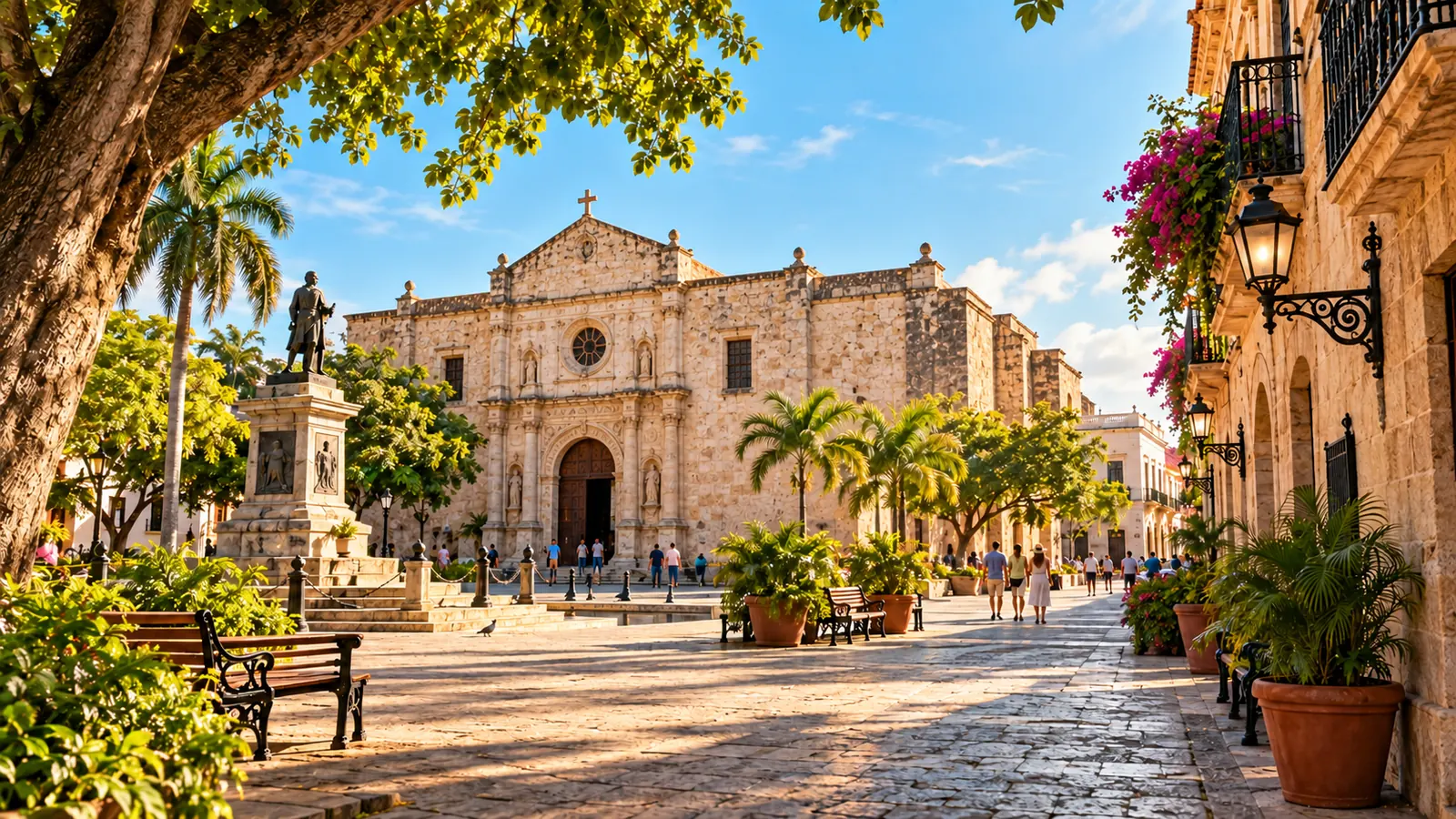
Build a manageable first route around Parque Colón, Catedral Primada de América and Calle Las Damas. Continue toward the historic monuments near Plaza de España if your energy and the weather allow. Leave room for a café stop rather than treating every landmark as a box to tick.
The compact historic district is a useful place to combine walking with museum visits, but indoor access, exhibitions and restoration work can change. Confirm the current arrangements for places such as Fortaleza Ozama, Museo de las Casas Reales and Alcázar de Colón. Wear comfortable shoes and carry water; shaded breaks make an ambitious itinerary easier to enjoy.
Cross the river, then decide whether to add a beach day
Give Santo Domingo Este its own outing. Los Tres Ojos offers a cave-and-lake landscape, while Faro a Colón is a different kind of cultural stop. Check admission, walking surfaces and access arrangements individually; do not assume a marker means a site is fully accessible.
Boca Chica belongs in a separate beach plan. Compare the beach access point, restaurant arrangements and return transport before setting out. Conditions at the shore vary, and shallow-looking water is not a guarantee of safe swimming. The Malecón in Santo Domingo is a waterfront promenade, not a substitute for choosing a swimming beach.
Eat locally and leave space in the schedule
A useful food itinerary mixes Dominican cooking with a few cafés or contemporary restaurants near the places you are already visiting. Use the map’s restaurant listings as a starting point, then check the exact branch, current menu and reservation options. Ask directly about dietary requirements and the final bill rather than relying on old menus online.
For a two-day visit, devote the first day to the Colonial City and the second to one other area: Santo Domingo Este, modern city neighborhoods or a planned beach outing. A third day gives you more flexibility for museums, parks or Boca Chica. These are editorial itinerary suggestions, not promises about how much you can see in a fixed time.
Arrive at SDQ with a clear transfer plan
Las Américas International Airport, also named José Francisco Peña Gómez, uses the code SDQ and sits east of central Santo Domingo. Check that code against your flight booking: a generic “Santo Domingo airport” search is not enough to confirm your arrival airport.
For a transfer quote, send the flight number, arrival date, passenger and luggage counts, and the complete hotel address. Confirm the meeting point, waiting policy, cancellation terms, child seats where needed, and whether the quoted total includes every charge. Use a live route estimate for your travel date and allow a buffer for traffic. A transfer enquiry is a request for availability, not a confirmed booking.
Frequently asked questions
Is Boca Chica part of central Santo Domingo?
No. Boca Chica is a separate coastal destination east of the capital. Plan a beach visit or stay there separately from your central city sightseeing.
Which area works best for a first visit?
The Colonial Zone is a practical starting point for history and walking. Compare Gazcue, the Malecón, Piantini, Naco or Santo Domingo Este against your own plans and the exact hotel location.
Which airport should I look for?
Look for Las Américas International Airport, code SDQ, on your ticket. Confirm the full airport name and your accommodation address before requesting transport.
Can I walk to every attraction?
A Colonial City route can combine nearby sights on foot. Santo Domingo Este, modern districts and Boca Chica require separate route planning; map distance is not a walking-time guarantee.
Sources
Related guides

Parque Colón
A shaded historic square beside the cathedral.

Catedral Primada de América
The landmark cathedral beside Parque Colón.

Fortaleza Ozama
A historic fortress overlooking the Ozama River.
Las Américas International Airport (SDQ)
The international airport serving Santo Domingo, east of the city.
Playa Boca Chica
A lively beach destination east of Santo Domingo, with waterfront dining and a coastal town setting.